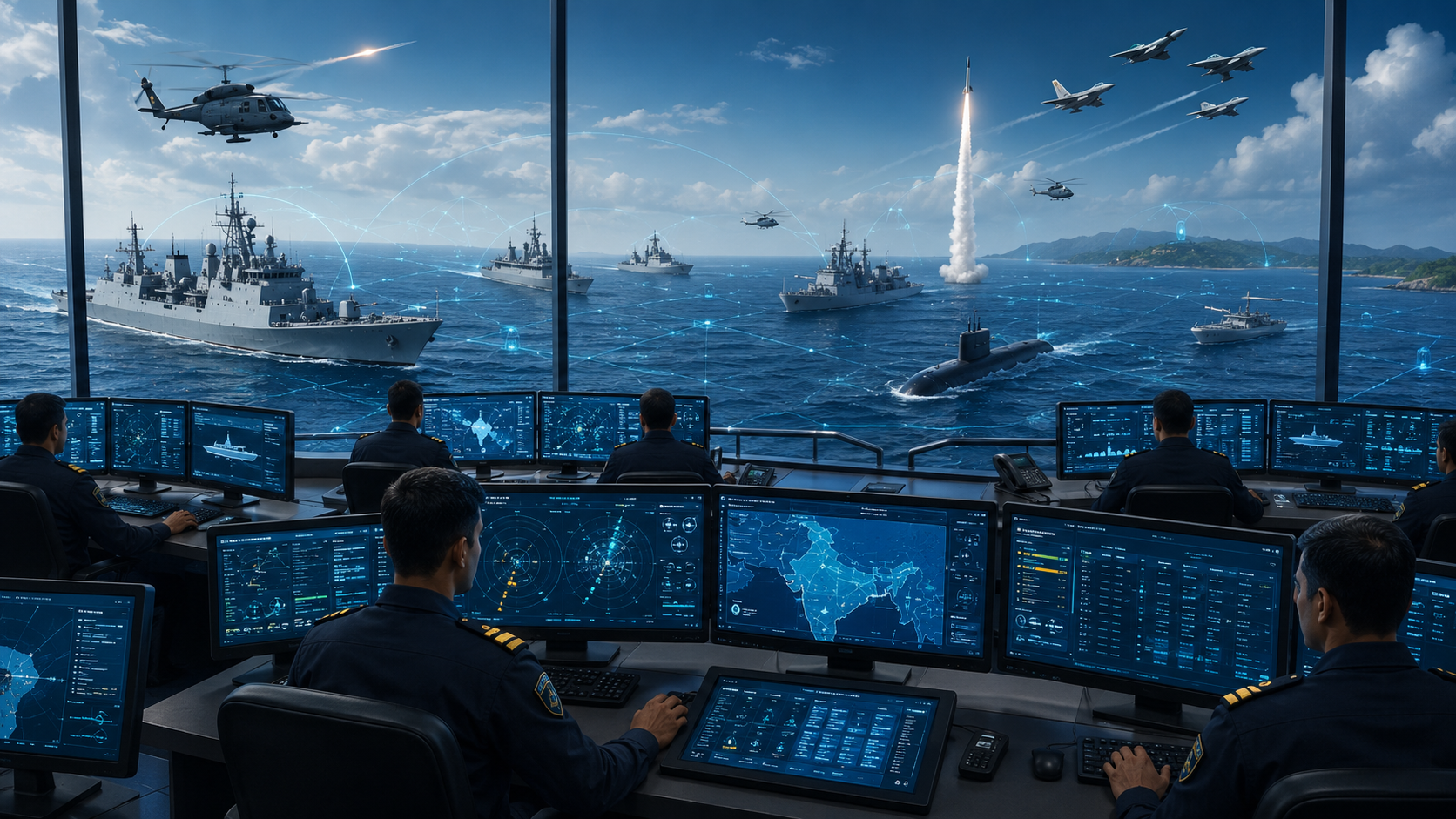
New Delhi: The Indian Navy has launched an ambitious modernization initiative to digitally transform the management of its weapons, ammunition, torpedoes, missiles, and explosive inventory through a next-generation platform called Indian Naval Armament Management System Version 2.0 (INAMS 2.0).
The advanced system is being developed under the Directorate General of Naval Armament (DGoNA) and is designed to integrate the Navy’s armament storage, repair, logistics, maintenance, and supply operations into a single secure digital network.

Officials say the project represents a major leap toward data-driven, AI-enabled naval logistics and operational readiness.
A Fully Integrated Digital Armament Network
The Indian Navy’s Naval Armament Organisation is responsible for managing a wide range of military assets, including missiles, torpedoes, naval mines, ammunition, explosives, and small arms used by both the Navy and the Indian Coast Guard.
Until now, many of these activities relied on fragmented systems and manual record-keeping. INAMS 2.0 aims to unify these processes through a centralized, web-based digital architecture capable of supporting real-time monitoring and decision-making.
The system will connect multiple naval armament depots and operational divisions, including guided weapons units, ammunition workshops, logistics management, transport, security, fire safety, training, medical support, and audit functions.
Real-Time Tracking of Missiles and Torpedoes
One of the platform’s key features will be its ability to maintain a live digital inventory of critical naval weapon systems.
The Navy will be able to monitor the operational status, movement, repair schedules, storage conditions, and lifecycle data of missiles, torpedoes, decoys, mines, and ammunition in real time.
Barcode and QR-code enabled tracking will further streamline supply chain visibility and inventory movement across depots and operational commands.
Officials say the platform will significantly improve accountability, reduce paperwork, and enhance operational efficiency across the naval armament ecosystem.
AI and Machine Learning for Predictive Maintenance
A major highlight of INAMS 2.0 is the planned integration of Artificial Intelligence (AI) and Machine Learning (ML) capabilities.
According to project details, the platform is being designed to analyze usage patterns, detect anomalies, and support predictive maintenance.
For example, if a particular missile system repeatedly develops technical faults or if the storage life of specific ammunition is nearing expiry, the system will automatically generate alerts and recommendations before failures occur.
Defence experts believe this predictive approach could improve weapon readiness, reduce downtime, and optimize inventory planning.
Cybersecurity Given Top Priority
Given the highly sensitive nature of military weapons data, cybersecurity has been placed at the core of the project architecture.
The platform will reportedly include:

- Multi-factor authentication
- AES-based encryption
- Role-based access controls
- Audit trails
- Annual vulnerability assessment and penetration testing (VAPT)
Additional safeguards are also being planned to protect AI-enabled systems from cyber manipulation, data poisoning, and unauthorized access.
Officials indicate that no major software modifications will be permitted without approval from the Navy’s cyber security authorities.
Built on the Indian Navy’s Secure Digital Network
INAMS 2.0 will operate over the Indian Navy’s dedicated Naval Communication Network (NCN), which links naval headquarters, command centers, data facilities, and operational depots nationwide.
The system is expected to support nearly 1,200 simultaneous users and will be integrated with the Navy’s Central Data Centre (CDC), Regional Data Centres (RDCs), and Naval Headquarters infrastructure.
Importantly, the platform is also being designed with offline operational capability, enabling field units to continue functioning in low-connectivity environments before synchronizing data once network access is restored.
Mobile Devices, Digital Pens, and Smart Data Entry
To support the transition away from manual documentation, the Navy plans to introduce modern digital hardware including tablets, QR scanners, digital pens, printers, and network-enabled devices across armament depots.
Personnel will be able to directly enter operational data through handheld systems, improving accuracy and reducing delays associated with paper-based processes.
The software will reportedly support multiple operating systems including Windows, Linux, and Android.
Full Ownership and Indigenous Control
In line with the government’s “Make in India” and “Aatmanirbhar Bharat” initiatives, the Indian Navy will retain complete ownership of the platform’s source code, design architecture, and intellectual property rights.
Officials say this approach is intended to reduce long-term dependence on foreign vendors and ensure future upgrades can be carried out domestically.
The system will also include modules to monitor the indigenous content of spare parts and equipment, helping the Navy track domestic sourcing and supply chain localization efforts.
Phased Implementation Planned
The project will be implemented in multiple stages, beginning with analysis of the existing INAMS-I platform, followed by design, software development, testing, data migration, user training, and operational integration.
Intermediate and final “go-live” phases are also planned before full-scale deployment.
Once operational, the system is expected to receive three years of maintenance and technical support.
Defence analysts view INAMS 2.0 as a critical component of the Indian Navy’s broader digital transformation strategy, where logistics data, predictive analytics, and secure networked operations are becoming as strategically important as the weapons themselves.





 ---------------------------------------------------------------------------------------------------